
Closed-cell foam insulation in Montebello, CA - stiffer walls and drier spaces
Drafty rooms, a damp crawl space or a wall you want stiffer? We look first, then spray dense foam only where it pays off.
Is closed-cell foam worth it for your Montebello house?
Closed-cell foam insulation is dense foam that blocks moisture and hardens in place, so in Montebello we use it where a house needs walls stiffened or moisture kept out, not everywhere.
Most calls start with a hot room over the garage, cold floors or a power bill that keeps climbing. Foam costs more and seals air while it insulates, but in a plain attic, closing the gaps with air sealing and topping up the loose fill usually wins unless your ductwork runs up there, and I'll tell you straight if you don't need foam.
The price moves with how many square feet you want covered, how thick the foam goes, how hard the space is to reach and whether old insulation has to come out first. The schedule turns on what has to be fixed first, whether a permit is needed and when your family can stay somewhere else, and your written estimate lays out what we'd do and in what order. We're licensed and fully insured, and the state's contractors board has its own license class for insulation work, so it's fair to ask anyone you hire which one they hold.
- We look at the attic, walls or crawl space before recommending anything, and note repairs first.
- Leaks, open gaps and wet or dirty old insulation get dealt with before any foam goes on.
- Closed-cell goes only where its strength or moisture control earns the extra cost.
What happens when you call us about closed-cell foam?
Every job starts with me or our lead installer looking at the space, because what gets fixed first matters as much as the foam. Here's how it goes from your call to the final walk-through.
Call or send the form
Call (213) 491-1019 or send the form, and we set a time to come look at the space in person. It helps to know which areas you want done, the rough square footage and the dates your household could stay elsewhere.
We look at the space first
I or our lead installer goes into the attic, walls or crawl space and writes down anything that has to be fixed before foam goes on, like a leak or wet old insulation. You get a written estimate that says what we'd do and in what order, so you know the scope before you commit to anything.
We handle permits and scheduling
If the job needs a permit, we pull it and set up the inspections, then book the spray day around when your household can be out. In Montebello that falls inside the city's construction hours, 7 a.m. to 8 p.m. on weekdays and 9 a.m. to 6 p.m. on weekends and holidays.
Our crew sprays and walks it
Our own crew does the work, trims the foam flush and cleans up. When it's done, we walk the job with you so you can see every area we covered.
What closed-cell foam looks like once it's sprayed in
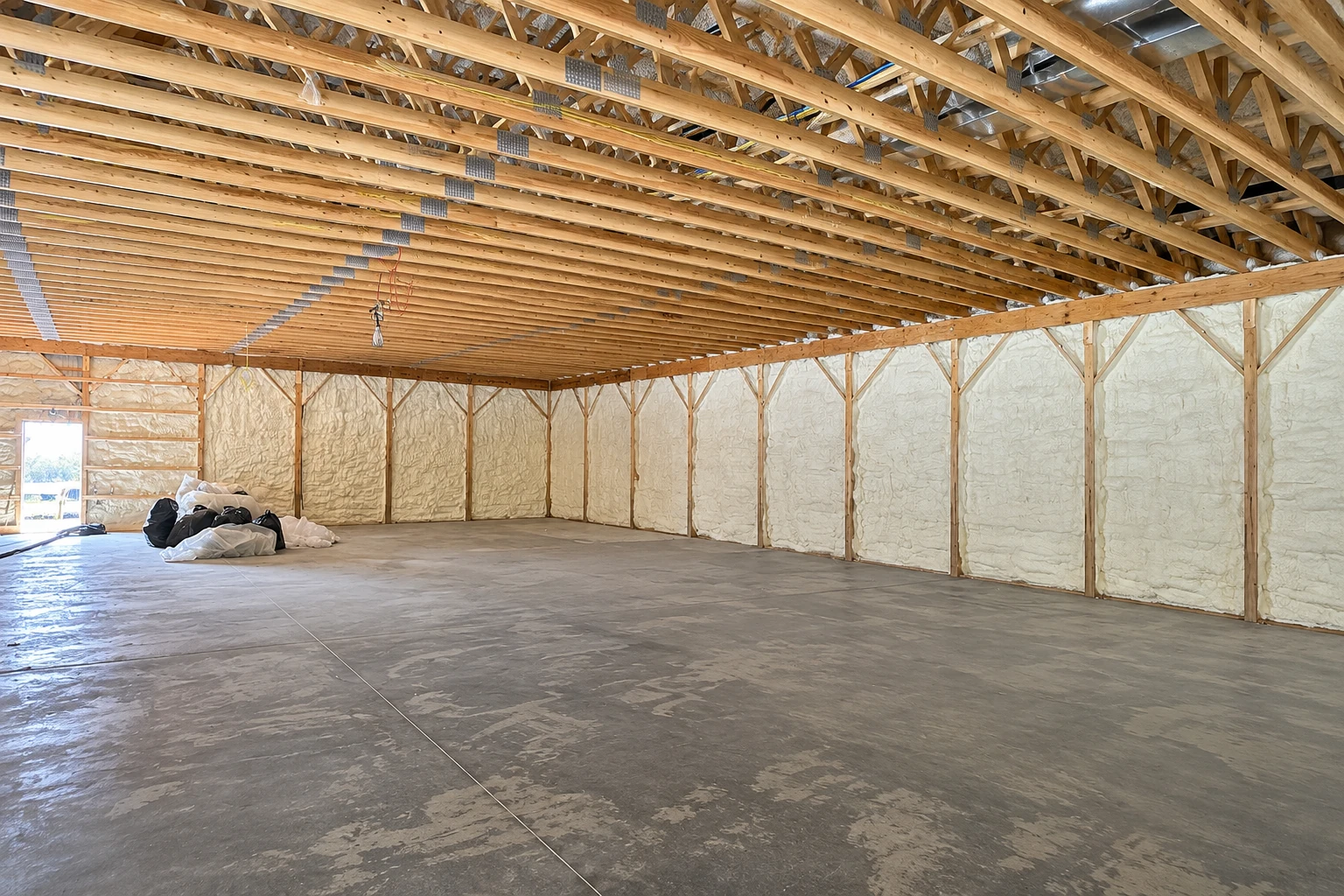
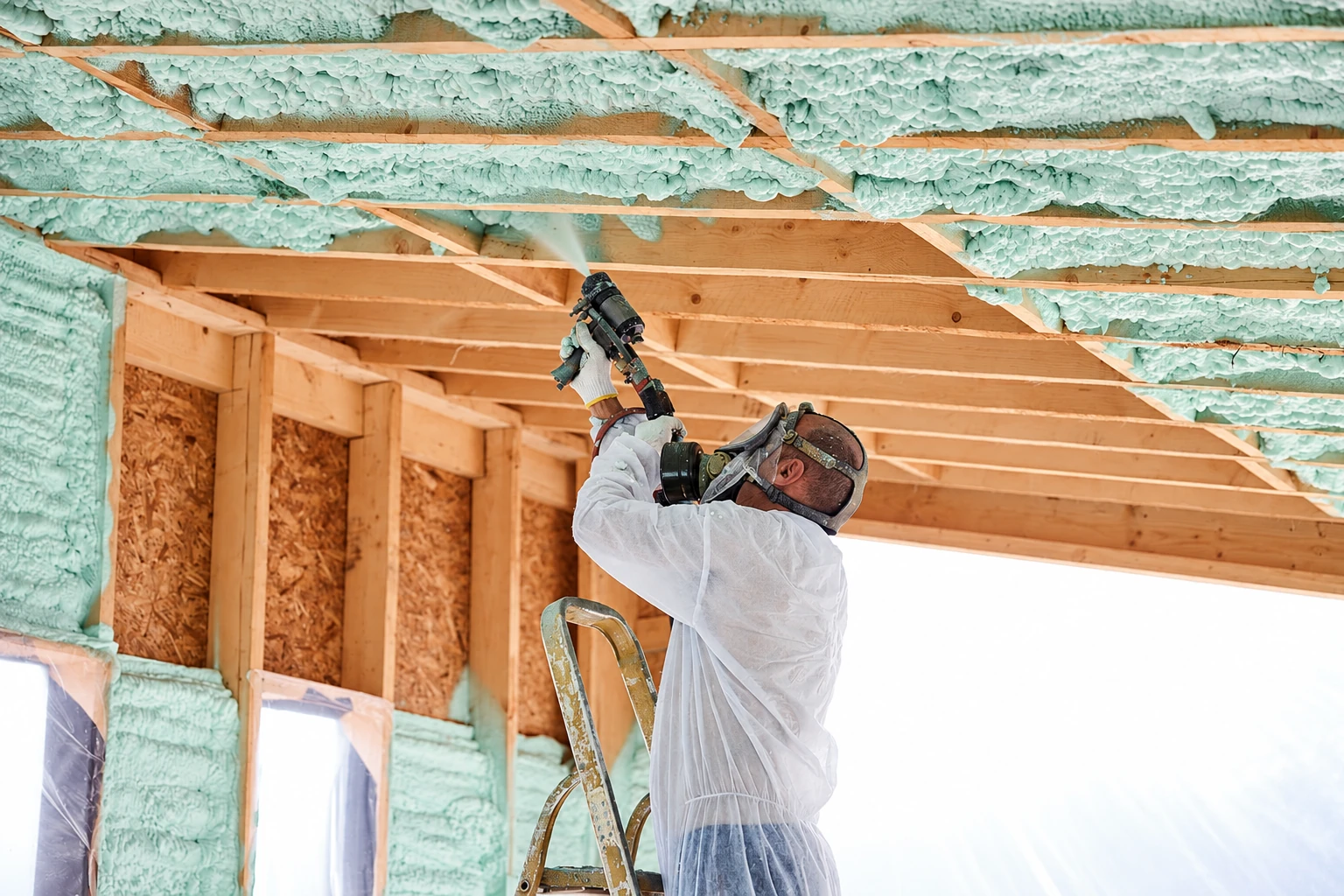
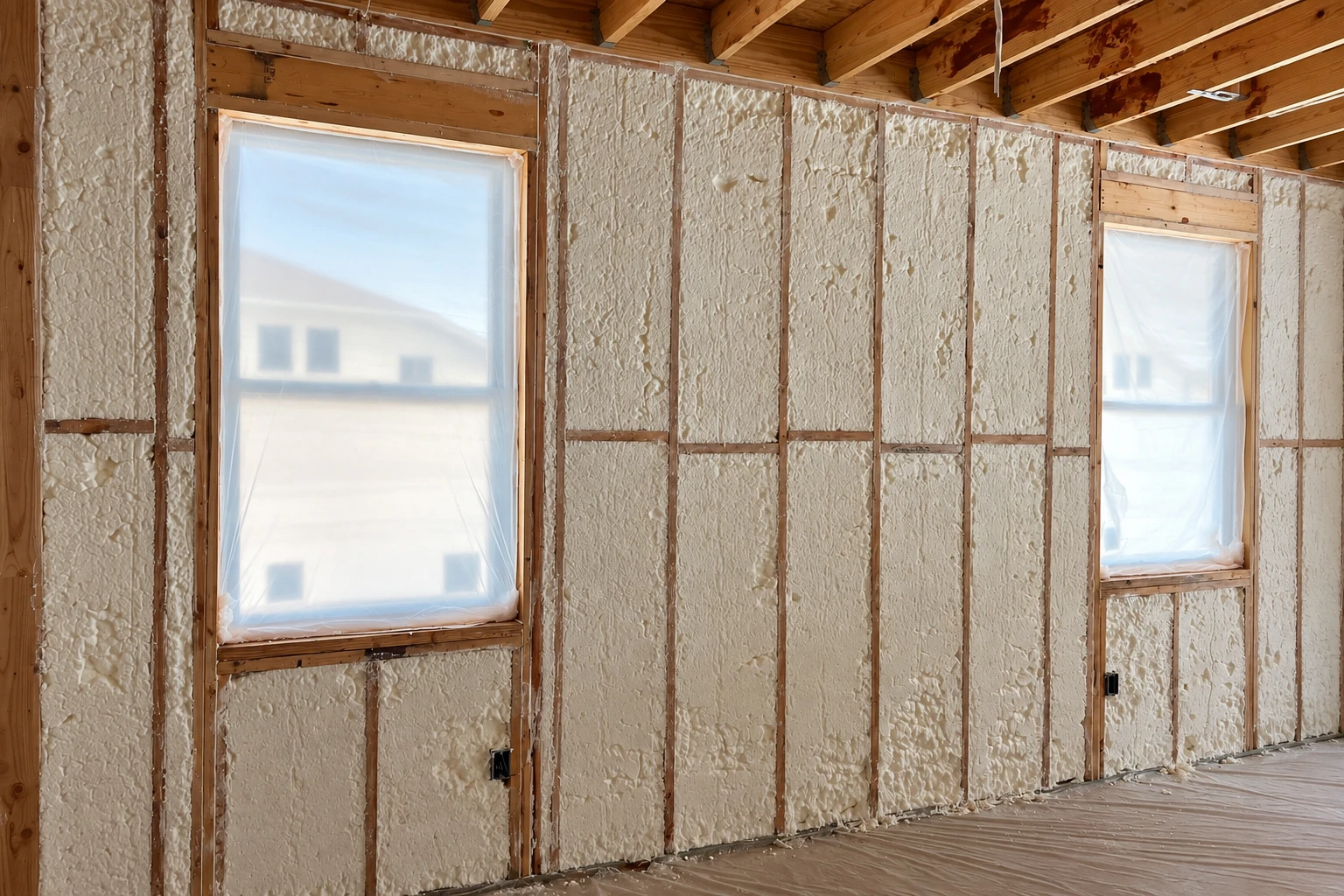
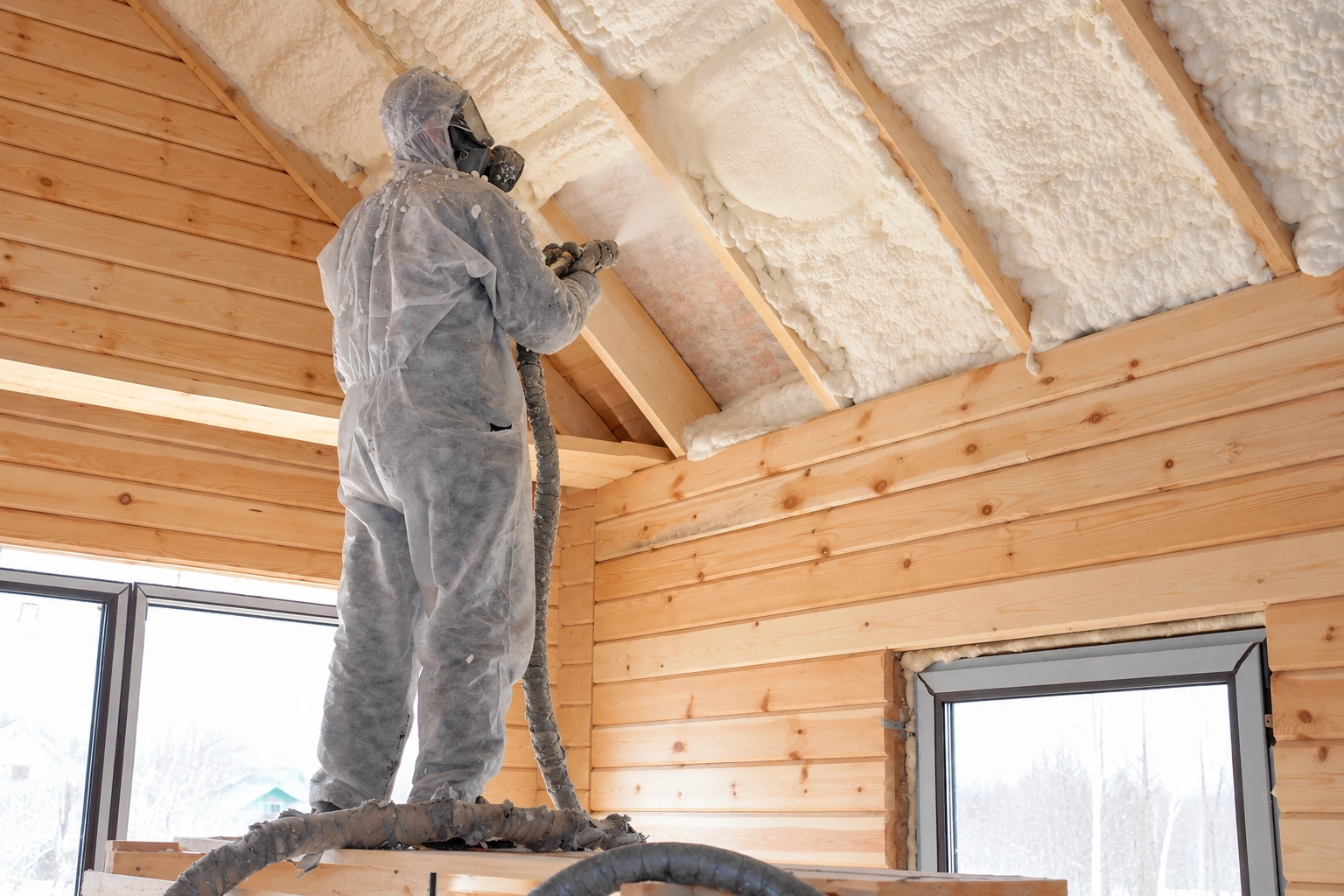
These photos show closed-cell foam in walls, rim joists and crawl spaces, the places it usually goes. Look at how it fills the cavity edge to edge and sets hard, which is where its strength comes from.
Attic with white blown insulation covering the floor and spray foam filling the roof rafters beside exposed wood framing and ducts.
Unfinished room with white spray foam insulation filling wall and roof cavities between exposed wooden studs and rafters.
Attic with loose white blown-in insulation across the floor beneath reflective roof sheathing and exposed wooden rafters.
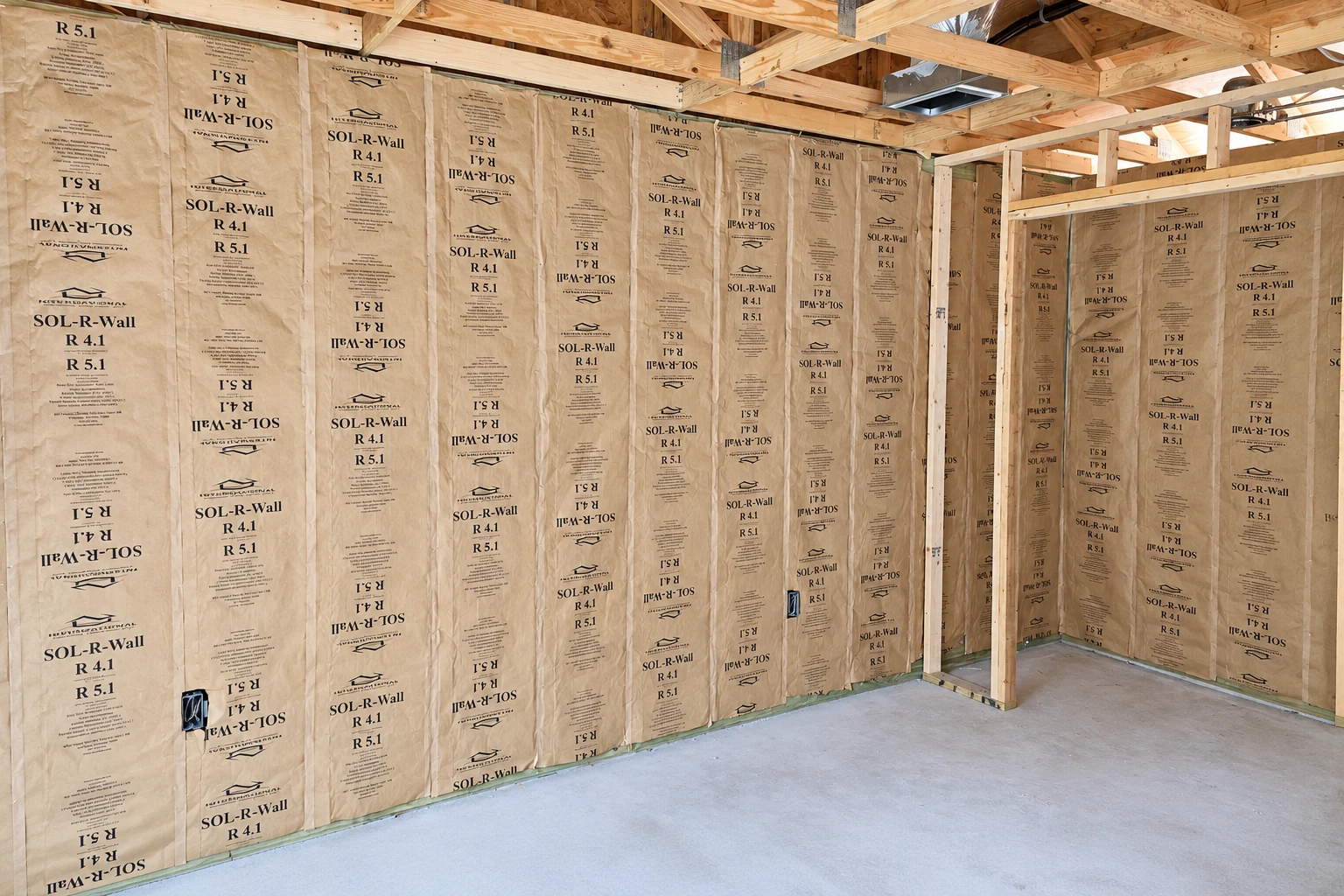
Close-up of tan fibrous batt insulation packed between wooden framing members.
Worker in protective coveralls, respirator and gloves uses a vacuum hose to remove loose insulation from an attic.
Crawl space with a white vapor barrier covering the floor, pink insulation between joists, and black ductwork overhead.
Get a written closed-cell foam estimate for your house
Send the form and we reply within one business day to set a time for a free look at the space, with no pressure to book. Mention any health concerns at home and dates you could stay elsewhere.
(213) 491-1019Closed-cell foam questions we hear in Montebello
These are the questions people ask before they decide on closed-cell foam. Most come down to cost, health and how long the house has to sit empty.
How much does closed-cell spray foam insulation cost in Montebello?
Professionally installed closed-cell spray foam usually costs about $3 to $5 per square foot across the US, and that's the market's figure, not our price. What yours comes to depends on how many square feet you're covering, how thick the foam goes and how hard the space is to reach, and the written estimate gives you that after we've looked.
How long does it take before we can go back in the house after spray foam?
It depends on the foam, and some makers recommend 24 hours after spraying before anyone moves back in. Safety guidance for spray foam advises finding a place for everyone in the home, pets included, to stay during the install, and says you should wait until the foam has cured and the house has been aired out and cleaned. Ask us which product we'll use and what re-entry time, the wait before you can come back, its maker gives, so you can plan your time away.
Is spray foam insulation safe if someone in my house has asthma?
It can be a real concern, because people with asthma, respiratory allergies, skin conditions or a past sensitivity to isocyanates, the chemicals that react to make the foam, should carefully review the product information before choosing it. Federal safety guidance says those households may want to consider safer alternatives. If anyone at home has asthma or allergies, I want to hear about it before you decide, and we'll talk through other ways to insulate.
How do I choose between closed-cell and open-cell spray foam?
Choose closed-cell when the space needs a rigid foam, because it's much harder to compress than open-cell and packs about R-6 per inch, R-value being how well insulation slows heat. If you just want a cooler room and the walls don't need stiffening or moisture control, the softer open-cell foam usually makes more sense, and we'll say so at the estimate.
Does closed-cell foam make walls stronger in an earthquake?
It can help, because a federal building guide says frame walls gain substantially more racking strength, their resistance to being pushed out of square, when closed-cell foam fills the cavities. The guide counts that as an advantage in earthquake country, so it's worth weighing if your walls are already open.
Do I need a vapor barrier with closed-cell spray foam?
Not a second one in the wall, because closed-cell foam at its typical thickness already works as a vapor retarder, a layer moisture vapor can't really pass through. That same building guide says walls with this foam need no second vapor retarder on the inner side and that one should be left out.
Closed-cell foam insulation in Montebello and nearby cities
Montebello's Building and Safety Division handles permits here, and its posted list doesn't name insulation, so we ask before every job. We do the same work across the cities around it, where many homes are older.