
Basement insulation in Montebello, CA - a comfortable room with dry walls behind it
A basement room that's cold, noisy or smells damp? We sort the water first, then insulate the walls so nothing gets trapped behind them.
How do you insulate a basement in Montebello without trapping moisture?
Basement insulation in Montebello means putting a layer like closed-cell spray foam or rigid foam panels against your foundation walls, so the room below ground holds a steadier temperature and keeps noise down. Done in the right order, with any damp sorted out first, it turns a basement into a room you'd actually use.
Most people call because the basement stays cold, carries every sound upstairs or smells a little damp, and they want a room they can actually use. The first thing I look at is water, and I'll tell you straight if a wall needs work before it's worth insulating.
The price moves with how many square feet of wall you have, which material goes on it, what has to cover the foam and whether a damp wall needs fixing first. The schedule turns mostly on that water question and on clearing things with the building office, and the written estimate you get lays out what we'd do and in what order.
- We check every foundation wall for damp spots and water signs before anything goes against it.
- We insulate full basements, partial basements and below-grade rooms for a steadier temperature and less noise.
- Old insulation that got soaked comes off first through insulation removal, so the problem doesn't stay behind.
What happens when you call us about your basement?
I or our lead installer looks at your basement before anyone talks numbers. Here's how it goes from your first call to the walk-through at the end, with the city's work hours where they matter.
Call and set a time
When you call (213) 491-1019 or send the form, we set a time to come look at the basement in person. It helps to know roughly how many square feet of wall you have and any signs of water you've noticed.
We look at the walls
I or our lead installer goes over the foundation walls and writes down anything that has to be fixed first, like damp spots, soaked old insulation or soil sloping toward the house. You see what we see before any price comes up.
You get a written estimate
The estimate is in writing and says what we'd do and in what order, so you know whether water work comes before the insulation and what each part involves. Nothing starts until you've read it and said yes.
Our crew does the work
Once we've cleared things with the building office, our own crew installs and covers the insulation inside Montebello's construction hours, 7 am to 8 pm on weekdays and 9 am to 6 pm on weekends and holidays. When we're done we walk the basement with you, and the work is satisfaction guaranteed.
What basement wall insulation looks like going on
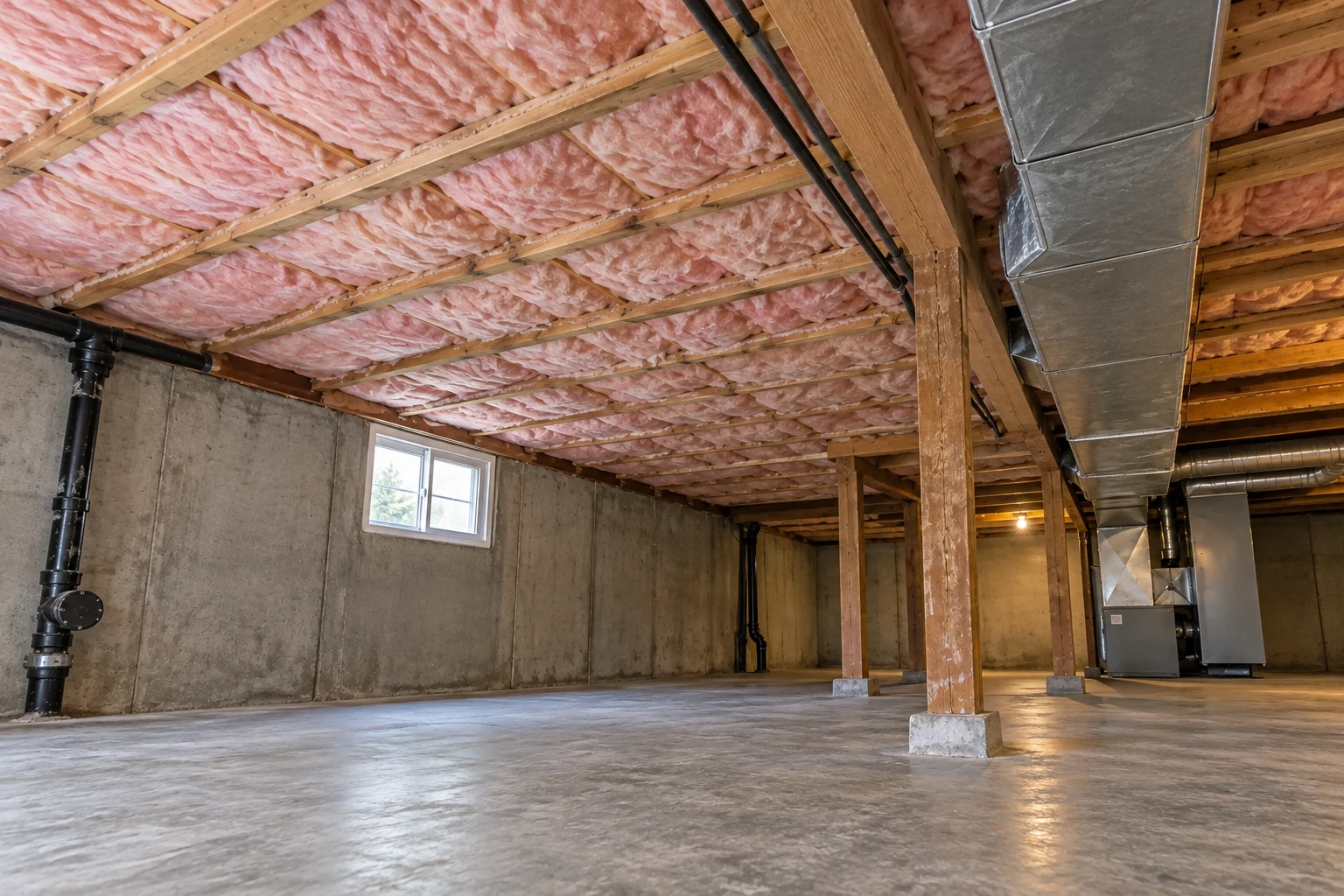
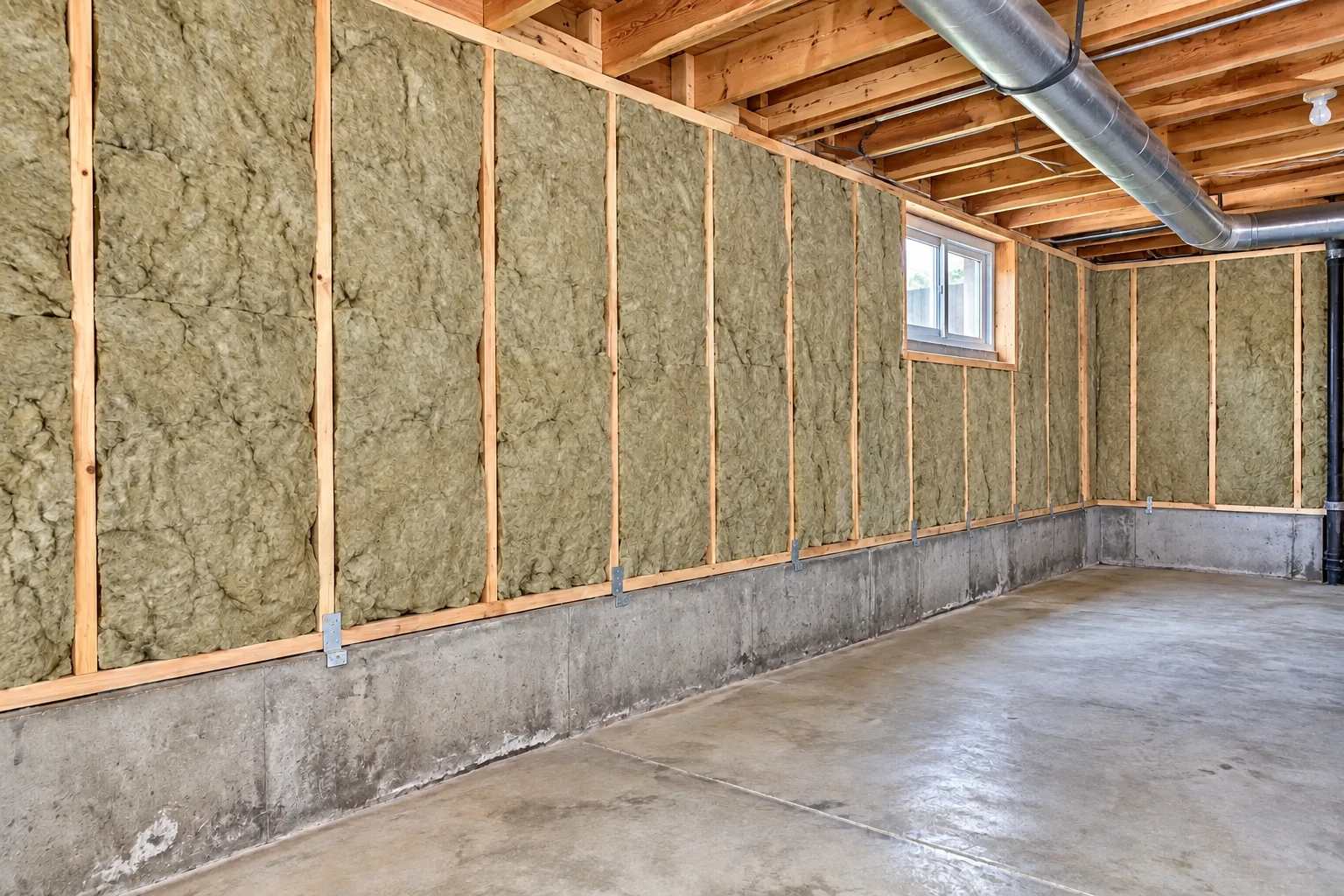
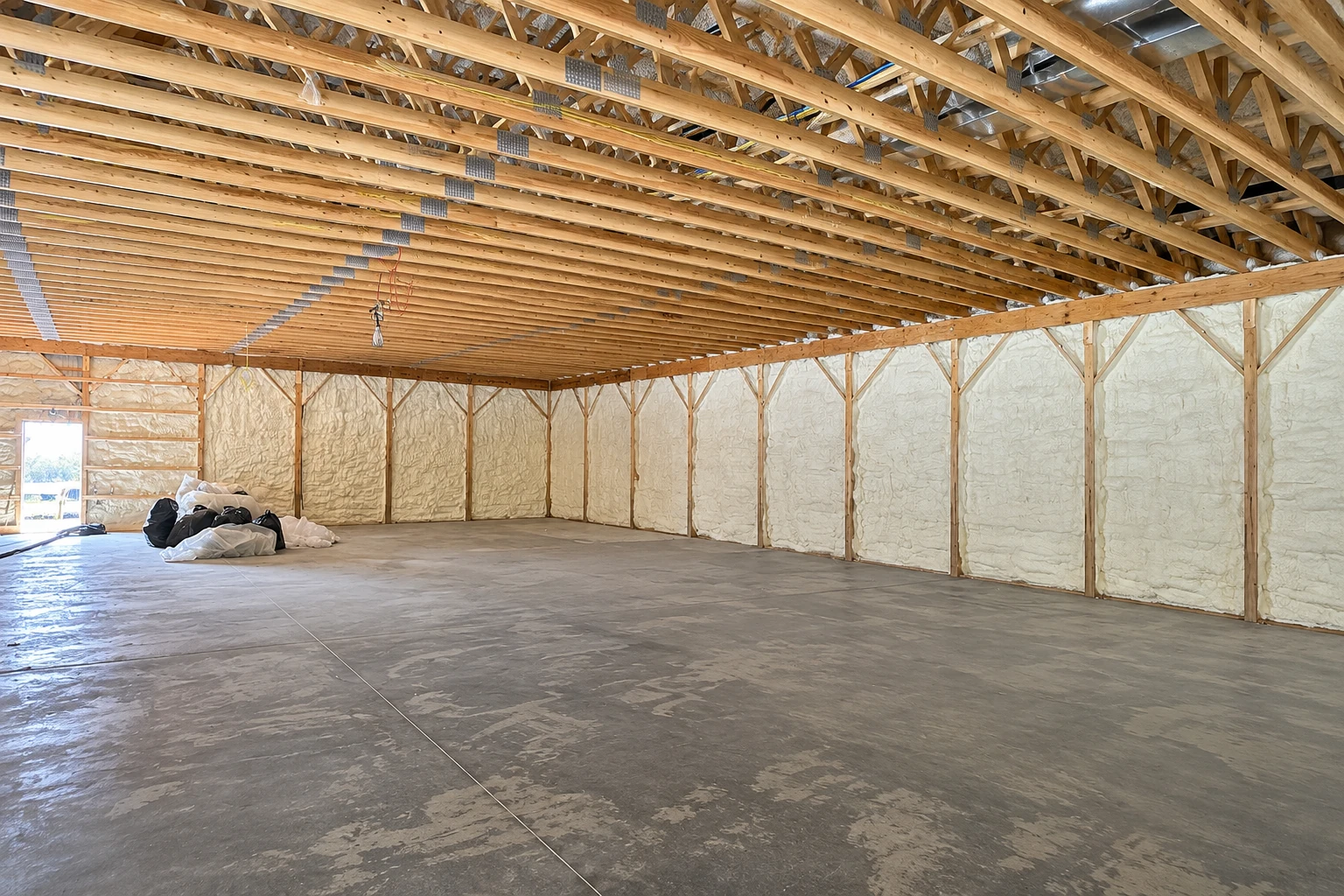
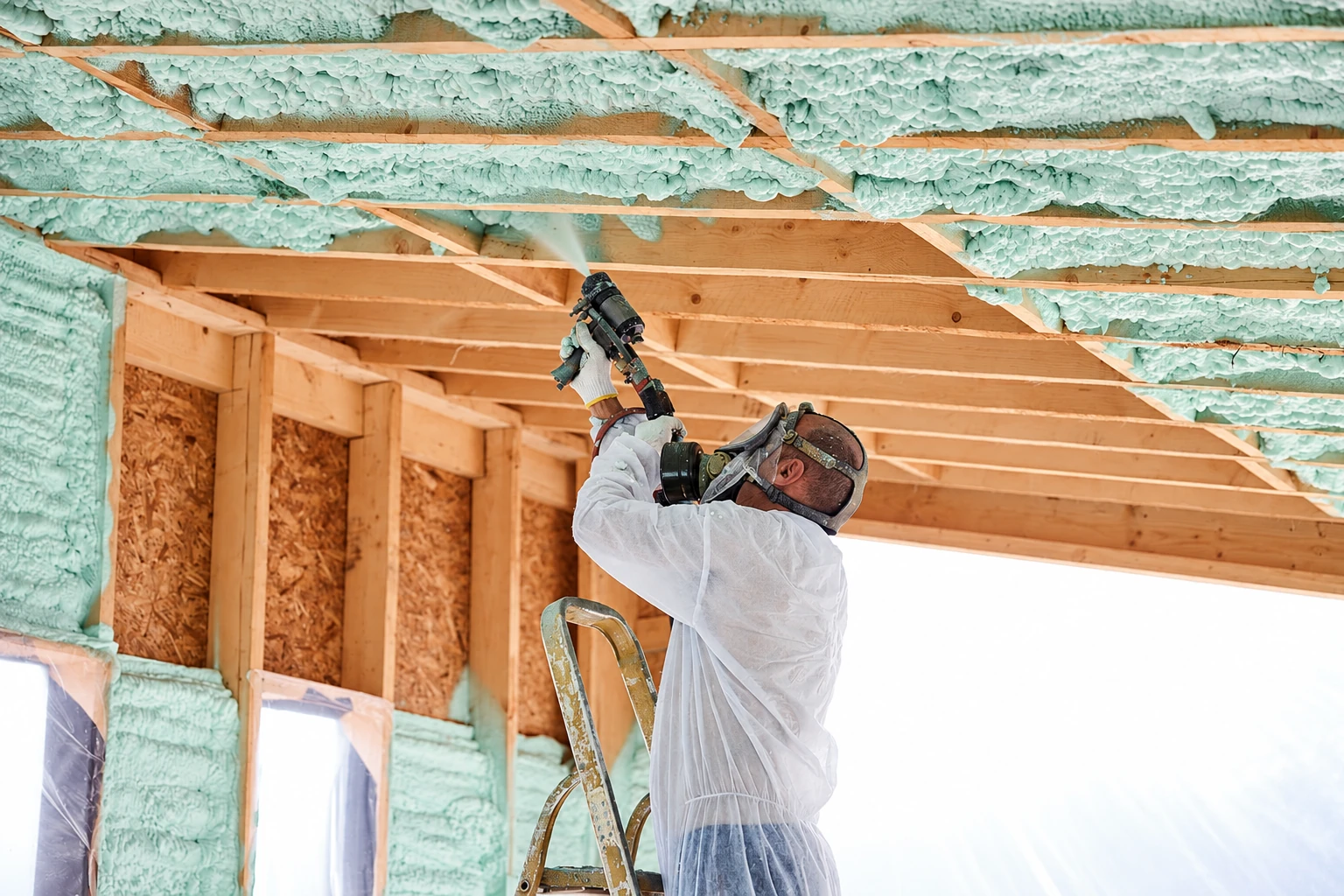
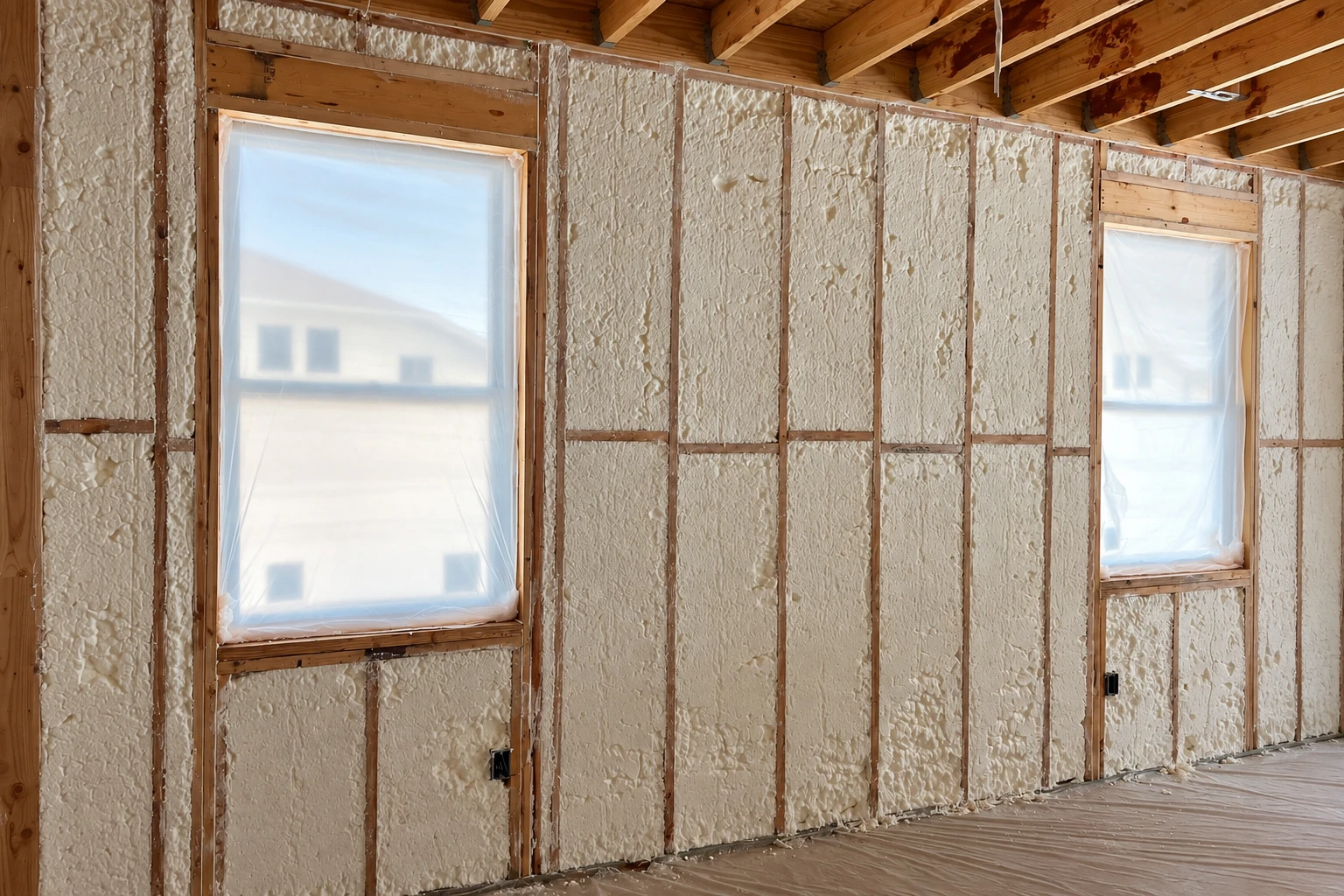
These photos show the trade in general, not our own jobs. You'll see foam on foundation walls, panels with sealed seams and the framed wall that often goes up in front of them.
Attic with white blown insulation covering the floor and spray foam filling the roof rafters beside exposed wood framing and ducts.
Unfinished room with white spray foam insulation filling wall and roof cavities between exposed wooden studs and rafters.
Attic with loose white blown-in insulation across the floor beneath reflective roof sheathing and exposed wooden rafters.
Close-up of tan fibrous batt insulation packed between wooden framing members.
Worker in protective coveralls, respirator and gloves uses a vacuum hose to remove loose insulation from an attic.
Crawl space with a white vapor barrier covering the floor, pink insulation between joists, and black ductwork overhead.
Get a written basement insulation estimate for your house
Call (213) 491-1019 or send the form, and we'll reply within one business day to set a time. The on-site estimate is free with no pressure to book, and it helps to have your wall area and any water signs ready.
(213) 491-1019Basement insulation questions we hear in Montebello
Here are the questions I get most about insulating a basement, from price to what goes against a damp wall. If yours isn't here, ask us when we come out to look.
How much does basement insulation cost in Montebello, CA?
Insulating a basement in the Los Angeles area usually costs about $1.50 to $4.50 per square foot, and that's the going rate around here, not a quote from us. Where your job lands depends mostly on your wall area and the material, and your written estimate gives your own figure.
What is the best way to insulate basement walls?
Federal building guidance rates closed-cell spray foam as the best interior insulation for moisture control on a foundation wall, and it doubles as an air barrier, a layer that stops air leaks. The same guidance says fiberglass batts and cellulose shouldn't touch the foundation wall, so whatever sits against the concrete has to be something else.
Do I need to fix moisture before insulating my basement?
Yes, sort out the water first and treat it as part of the job. Insulating a basement wall without dealing with moisture can hide the problem, and sometimes the insulation traps water in the wall and makes things worse. Outside, guidance also says soil that doesn't slope away from the house should be regraded to a 5% slope for at least the first 3 feet, and 10 feet if you can.
How do I keep insulation from trapping moisture in a basement wall?
Keep plastic sheeting and foil-faced sheathing off the room side of fiberglass in a basement, because federal guidance says they can trap moisture in the wall. That guidance points to Kraft-faced fiberglass batts or latex paint on the drywall instead, as a vapor retarder, a layer that slows moisture.
What license does an insulation contractor need in California?
The state licensing board has a C-2 Insulation and Acoustical classification for contractors who install any kind of insulation for temperature or sound control. We're licensed and fully insured, and you're welcome to ask about it when we come out.
Should I worry about radon before insulating my basement?
It's worth asking about, because an older federal fact sheet says that if the soil around your home has radon gas, the house will need a mitigation system under the basement floor. That system is separate from the wall insulation we put up.
Basement insulation in Montebello and the cities nearby
The city's Building and Safety Division decides whether a Montebello basement job needs a permit, so we check first and pull it if it does. Basements here mostly sit under older houses, and we work the cities nearby too.